5 min read · with Coach Finn
How Do You Not Panic in Open Water?
Part of Open Water and the Swim Panic Nobody Warned You About
Panic in open water is normal, and it is not a character flaw
If the thought of swimming in a lake or the sea makes your chest tighten, you are not weak and you are not alone. Open-water panic is one of the most common experiences in all of triathlon, and it happens to people who can swim perfectly well in a pool. Naming it honestly is the first step to managing it.
Open water removes the things that make a pool feel safe: the line on the bottom, the wall every 25 meters, the clear water, the ability to stand up. Add cold, waves, other swimmers, and you cannot see your hand in front of your face, and your nervous system can sound the alarm even though you are physically fine. The goal is not to never feel fear. The goal is to have a plan so the fear cannot run away with you.
The safety rules that come before everything
Before any technique, the non-negotiables. These are not suggestions.
- Never swim alone in open water. Always have a buddy, a coach, or supervised conditions with lifeguards or safety craft.
- Start supervised. Your first open-water sessions should be in a controlled setting: a lifeguarded swim area, an organized open-water session, or with a coach.
- Check the conditions. Water temperature, current, weather, and visibility all matter. If conditions are unsafe, you do not swim. There is no workout worth drowning for.
- Know your exit. Always know where and how you will get out before you get in.
- A wetsuit helps. In cold water it adds warmth and a lot of buoyancy, which makes floating and resting much easier, and that float is genuinely calming for an anxious swimmer.
If you have a heart or breathing condition, chest pain, fainting, or any medical concern, get medical clearance before open-water training. Cold water in particular is a real stress on the body.
The single most important skill: roll over and float
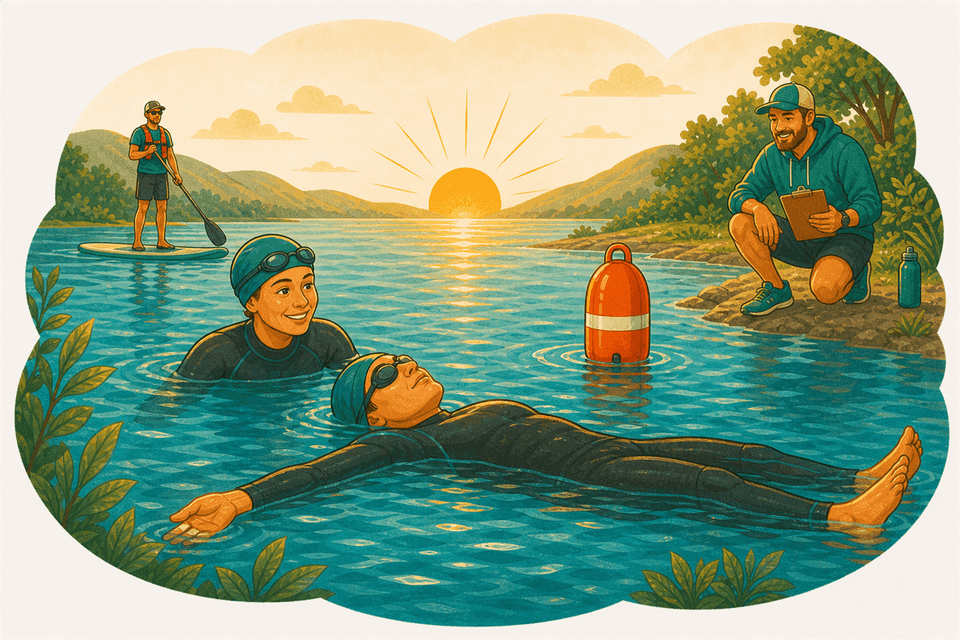
If you take one thing from this page, take this. The moment panic rises, you do not have to keep swimming. You can stop, roll onto your back, look at the sky, and breathe.
Floating on your back is your reset button. With air in your lungs, and especially in a wetsuit, the water holds you. You are not going to sink by stopping. You catch your breath, let your heart rate settle, and continue only when you are calm. Practice this in the pool until it is automatic, so that in open water your body already knows the move.
This is not quitting. This is the most in-control thing a swimmer can do.
Why the panic spiral happens, and how to break it
Open-water panic usually follows a pattern. You start a little tense. Your breathing gets short and high in your chest. The shortness of breath feels like danger, so you tense more and breathe even less. Around and around.
You break it the same way you break pool panic: with the exhale.
When your face is in the water, breathe out slowly and continuously, gentle bubbles. When you turn to breathe, you are only sipping air in, not desperately gulping. A steady exhale keeps the pressure out of your chest and gives the alarm nothing to grab. If the exhale slips, slow down, switch to breaststroke so your face is up, or roll onto your back and reset.
The gradual path from pool to open water
You do not jump from pool-comfortable to race-ready in one terrifying leap. You ladder up.
- Be calm and comfortable swimming in the pool first, including floating and breaststroke resets.
- Get into supervised open water and just stand, then put your face in, then float. No swimming yet.
- Swim short distances parallel to shore, in shallow water where you can stand, with a buddy.
- Practice sighting, lifting your eyes just enough to spot a landmark, every several strokes.
- Slowly extend the distance, always with supervision, always with the option to roll and float.
- Practice in the same kind of water as your race before race day.
Each rung should feel almost boring before you move up. Boring is the goal. Boring means safe.
On race day
- Warm up in the water beforehand if allowed, so the first cold shock is not during the start.
- Start at the back or the side, away from the washing-machine crowd, where there is calm water and room to breathe.
- Go easy for the first few minutes. The early adrenaline is when panic strikes most.
- If it rises anyway, roll onto your back, breathe, and reset. The race will wait.
- If you are ever in real trouble, raise an arm and signal for help. Safety staff are right there for exactly that.
FAQ
Is open-water panic dangerous?
The panic itself is manageable with the float-and-breathe skills, but open water demands respect. The danger comes from swimming alone, in unsafe conditions, or ignoring warning signs. Supervised practice and the safety rules above are what keep it safe.
Will a wetsuit really help my anxiety?
For many people, yes. The added buoyancy means you float easily and can rest without effort, which removes a big source of fear. The warmth also reduces cold-shock stress. Rent one to try before buying.
How do I practice sighting?
Every several strokes, lift your eyes just above the surface to spot a fixed landmark, then return your face to the water. Practice it in the pool first so it does not disrupt your breathing rhythm in open water.
What if I just cannot get calm in open water?
Then you step back to an easier rung, get more supervised practice, and consider working with an open-water coach. Some races also offer pool-based swims, which can be a great first-race option while you build open-water confidence.
The bottom line
You manage open-water panic with a plan, not with willpower: never alone, always supervised at first, exhale steadily, and roll onto your back to reset the moment you need to. Build up one boring, safe rung at a time.
Coach Finn builds your open-water progression as gradual, safety-first steps, never a leap. Check with a healthcare professional before starting open-water training if you have any medical condition or symptom that concerns you.