5 min read · with Coach Finn
Why Do My Calves Cramp When I Start Running?
Part of Learning to Run From Zero, Without Getting Hurt
First, take a breath. If your calves seize up a few minutes into a run, you are not broken and you are not doing it wrong. This is one of the most common things new runners feel, and it almost always has a simple, fixable cause. Let me walk you through why it happens and what to do about it, in plain language.
Why It Happens to New Runners
Your calves do a lot of quiet work when you run. Every step, they absorb impact and spring you forward. When you are brand new to running, those muscles simply are not used to that job yet, so they protest. Here are the usual culprits I see with beginners.
- Doing too much too soon. This is the big one. Going from zero to thirty minutes of running asks your calves to handle a load they have never seen.
- Tight or weak calves. Muscles that are not used to impact fatigue fast, and a tired muscle cramps more easily.
- Dehydration and low electrolytes. When you are low on fluids or on minerals like sodium, potassium, and magnesium, your muscles get twitchy and cranky.
- Running too fast. New runners often start at a pace they cannot hold. Your calves burn through their fuel, and they cramp.
- New shoes or a big shoe change. A fresh pair, especially one with a lower heel, can suddenly ask your calves to stretch and work in ways they are not ready for.
- A too-aggressive forefoot strike. Landing way up on the balls of your feet keeps your calves under constant tension, and they tire quickly.
Most of the time it is a mix of these, not just one. The good news is that the fixes overlap, so you do not need to chase every cause separately.
How to Stop Cramps Before They Start
Here is where you get to feel like a smart, patient runner instead of a frustrated one. These changes are small, and they add up fast.
Build gradually. This is the single best thing you can do. Instead of pushing through long stretches of running, mix in walking. A run-walk approach lets your calves adapt to the impact a little at a time. If you are not sure where to begin, I cover the whole process in learning to run from zero, and you can find a concrete starting point in the best run-walk ratio for beginners.
Slow down. I mean it. If you can comfortably hold a conversation while you run, you are at the right pace. Most beginner cramps melt away the moment people stop racing themselves.
Warm up first. Give yourself five minutes of brisk walking or an easy slow jog before you ask your calves to do real work. Cold muscles cramp more easily than warm ones.
Hydrate sensibly. Drink water through the day, not just right before you head out. If you sweat a lot or run in heat, a pinch of electrolytes can help. You do not need anything fancy.
Strengthen those calves gently. A little strength work makes a big difference, and it does not take long. Heel raises are perfect. Stand tall, rise up onto the balls of your feet, lower slowly, and repeat for two sets of ten to fifteen. Do them a few times a week. If you want to understand how this fits into the bigger picture, take a look at whether you need strength training for triathlon.
Ease into new shoes. If you just bought a pair, wear them for short, easy runs first. Let your calves adjust before you ask them to go long.
Soften your stride. You do not need to land hard on your toes. Aim for a quiet, easy footfall under your hips. If you have been pushing way up on your forefoot, relaxing that a little often settles the calves right down.
What to Do When a Cramp Hits Mid-Run
Even with good habits, a cramp can still sneak up on you. Here is your simple in-the-moment plan.
- Stop running. There is no prize for pushing through a cramp, and doing so can make it worse.
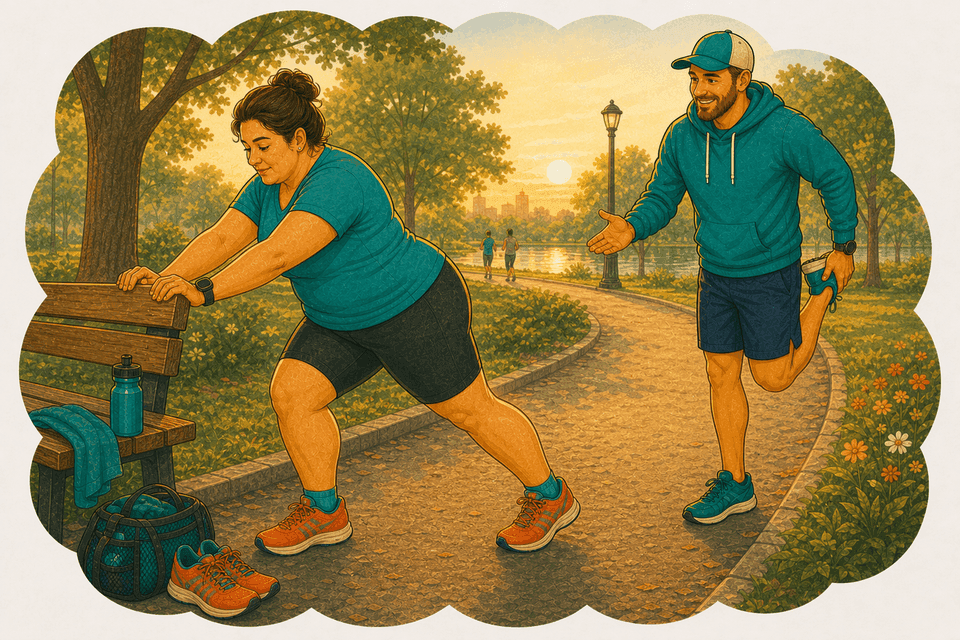
- Gently stretch the calf. Step the cramping leg back, keep the heel down, and lean slightly forward into a wall or just into the air. Hold it easy for twenty to thirty seconds. Gentle is the key word, no forcing.
- Walk it out. Once the sharp grip eases, walk slowly for a minute or two. Movement helps the muscle relax and reminds it that everything is okay.
- Sip some water. A little fluid, and electrolytes if you have them, can help things settle.
Once the cramp is gone, you can usually finish your session at an easy walk or a gentle run-walk. There is no need to call it a disaster. Treat it as your calves telling you what they can handle today.
When to Check In With a Professional
A normal cramp is uncomfortable but passing. It eases with rest and a gentle stretch, and your leg feels fine afterward. That is the kind we just talked about, and it is nothing to worry about.
A few signs are worth taking seriously, though. Please see a doctor, physical therapist, or sports medicine professional if you notice any of these.
- A sharp pop or sudden sharp pain in the calf, especially if it stops you in your tracks.
- Pain that keeps coming back, lingers for days, or clearly gets worse over time.
- Pain, swelling, tenderness, or warmth in just one calf.
These are not the everyday cramps most beginners get, and a quick check from a professional gives you peace of mind and a clear path forward. When in doubt, get it looked at. There is no downside to being careful with your own legs.
You Are Doing Better Than You Think
Calf cramps are a normal part of teaching your body something new, and nearly every runner I have coached has felt them at some point. Go a little slower, build a little more patiently, give those calves some gentle love, and they will quiet down faster than you expect. You have got this, and we are right here with you at couchtotri.com whenever you need a hand.