6 min read · with Coach Finn
Gels vs Real Food for Beginners: What Should I Try First?
Part of Fueling for Beginners, and How to Avoid the Bonk
If you have stood in the sports nutrition aisle staring at a wall of shiny gel packets and wondered whether you actually need any of it, take a breath. You are not behind. Fueling can feel like a secret club with its own language, but the basics are simple, and you have more good options than you think. Let me walk you through it.
First, A Surprise: For Short Sessions You Probably Need Neither
Here is the thing nobody tells beginners. For most short workouts, you do not need gels or food at all. You just need water.
If your session is under about 60 to 75 minutes, your body already has enough stored fuel on board to get you through. Topping up with carbs during a 30 minute easy bike or a 40 minute run is usually unnecessary. So if you have been feeling guilty for not slurping a gel on your Saturday jog, you can let that go.
When sessions stretch past that 60 to 75 minute mark, or when you are working hard the whole time, that is when adding some fuel starts to matter. That is the moment this whole gels-versus-food question becomes worth answering. If you want a deeper look at why running out of fuel feels so awful, I wrote about avoiding the bonk separately.
One quick note before we go on. If you have a medical condition that affects your blood sugar, such as diabetes, please check with your doctor before changing how you fuel. The general advice here is for healthy beginners.
What Gels Actually Are
A sports gel is basically concentrated, fast-acting carbohydrate in a small squeezy packet. One gel usually gives you somewhere around 20 to 30 grams of carbs, which your body can turn into usable energy pretty quickly.
The appeal is real. Gels are tiny, they tuck into a pocket or a race belt, they do not melt or get squashed, and they go down fast when you are breathing hard. For longer or faster efforts, that convenience is genuinely handy.
A couple of honest catches, though. Because gels are so concentrated, you almost always need to take them with a few sips of water. Swallowing a thick gel on its own can leave it sitting heavy in your stomach. And some people, especially when they are new to them, find that gels upset their gut a little. That is not a sign you are doing anything wrong. It just means your stomach is still learning, which brings me to the most important idea in this whole post in a minute.
Real Food That Works Just Fine
Here is the good news for your wallet and your stomach. Plenty of ordinary food does the same job as a gel, and beginners often get along with it beautifully.
Some easy options to try:
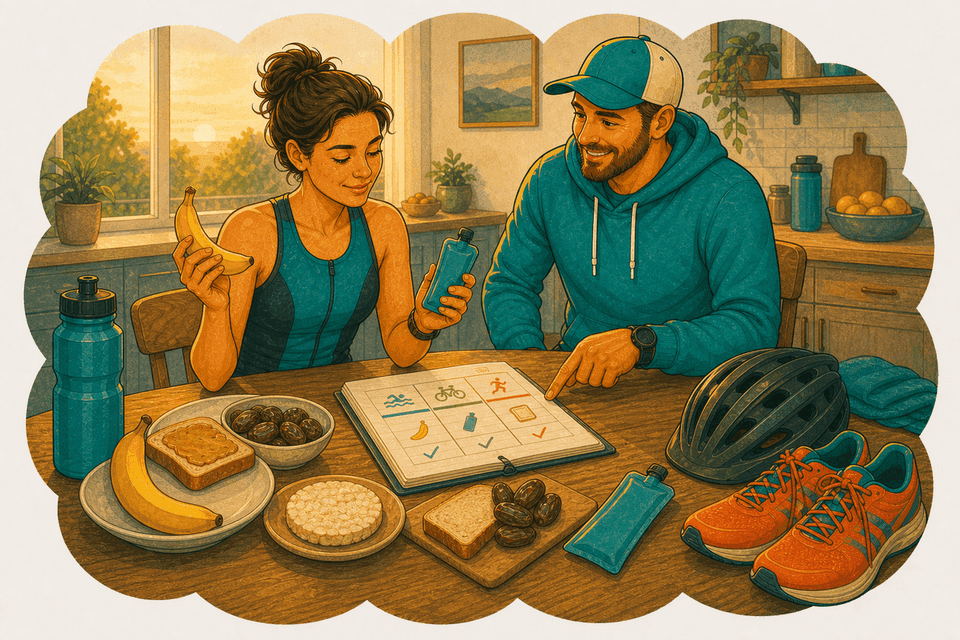
- A banana. Cheap, gentle on the stomach, and a classic for a reason.
- A few dates. Small, sweet, and packed with quick carbs.
- A fig bar. Easy to chew and easy to carry.
- A simple cereal bar. Look for one that is mostly carbs and not too heavy on fat or fiber.
These foods are slower to get into your system than a gel, but for steady beginner-paced sessions, that is perfectly fine. They are also a lot cheaper than buying boxes of gels, and many people simply find them more pleasant to eat than squeezing sugar from a foil packet.
The trade-off is that real food can be a bit bulkier to carry, and it can be harder to chew and swallow when you are going hard and breathing fast. That is exactly why gels start to win as your efforts get longer and more intense.
So Which Should A Beginner Try First?
My honest take after coaching a lot of nervous first-timers: real food is a wonderful place to start. It is cheap, it is familiar, your stomach usually tolerates it well, and it takes the pressure off feeling like you need fancy gear to be a real athlete.
So here is a simple starting approach. For any session under about an hour, just bring water. For your longer weekend sessions, pack a banana or a couple of dates and practice eating a little while you move. As your training rides and runs get longer, or as you start pushing the pace, that is the natural time to experiment with adding a gel or two for the convenience.
Think of it as a ladder. Water at the bottom, real food in the middle, gels near the top for when efforts get long or fast. You do not have to climb it all at once. Most beginners spend a happy long while on the bottom two rungs.
If you are training toward your first race, my guide on how to fuel a sprint triathlon walks through exactly how this plays out over swim, bike, and run.
The Golden Rule: Practice In Training, Nothing New On Race Day
If you remember one thing from this post, make it this. Whatever you choose, gels or real food, you practice it in training first. Never try something brand new on race day.
There are two reasons. First, you want to know that your chosen fuel actually sits well in your stomach when your heart rate is up. Second, your gut is trainable. That is not a figure of speech. The more you practice eating and drinking while you exercise, the better your body gets at handling fuel without complaint. A stomach that rebels at a gel in week one often handles it fine after a month of gentle practice.
So treat your long sessions as dress rehearsals. Eat what you plan to eat on race day, at roughly the times you plan to eat it, and pay attention to how you feel. By the time race morning arrives, nothing about your fueling should be a surprise. Speaking of race morning, what you eat beforehand matters too, and I cover that in what to eat the morning of a triathlon.
You Have Got This
Fueling is not a test you can fail. It is a skill you build one session at a time, just like swimming or pacing. Start simple, start cheap, and let your stomach learn alongside your legs. A banana and a water bottle will carry most beginners a long, long way before anything fancier is needed.
Whenever you are ready for the next step, we will be right here at couchtotri.com to help you take it.