5 min read · with Coach Finn
How Do You Fuel a Sprint Triathlon?
Part of Fueling for Beginners, and How to Avoid the Bonk
Good news: a sprint is short enough that fueling is simple
If you have fallen down the internet rabbit hole of gels, carb-loading, electrolyte ratios, and gut-training protocols, take a breath. Most of that is aimed at people racing for four, six, or twelve hours. A sprint triathlon is short, usually somewhere around an hour to ninety minutes for a beginner, and that changes everything.
For a race that length, you do not need a complicated fueling plan. You need a good meal beforehand, water and maybe a bit of carbohydrate during, and one ironclad rule that matters more than any product.
The one rule: nothing new on race day
Write this on your hand if you have to. Never try a new food, drink, gel, or supplement for the first time on race day.
Your gut is a muscle that gets trained like any other. A food that sits fine on the couch can rebel when you are nervous and working hard. The way you avoid a miserable race is to practice your exact pre-race meal and your during-race fluids in training, on your longer brick or workout days, until you know they sit well. Race day is for repeating what you have rehearsed, not experimenting.
Before the race
Eat a familiar, mostly-carbohydrate meal a few hours before the start, long enough to digest. The classic choices are popular because they work:
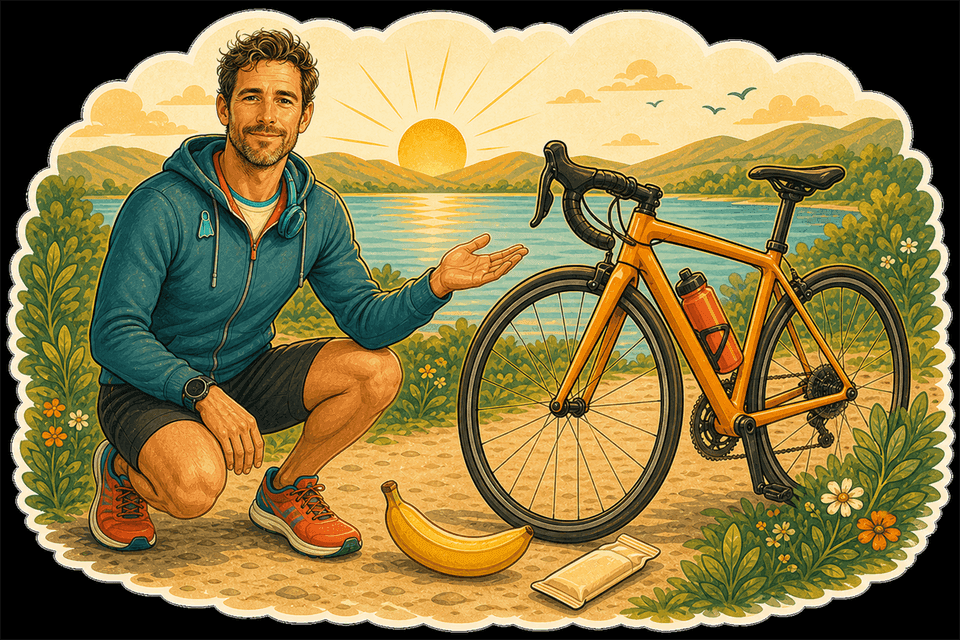
- Oatmeal with a banana.
- Toast with honey or jam, or a bagel.
- A bowl of cereal.
- Whatever YOU have practiced and know sits well.
Keep it moderate in fat, fiber, and protein, since those slow digestion and can cause stomach trouble when you are working hard. Aim to finish eating two to three hours before the start, then sip water up to the gun. If you wake very early and the race is later, a small familiar snack an hour before is fine if you have practiced it.
Have your normal coffee if you normally have coffee. Race morning is not the day to add or remove caffeine.
During the race
For a sprint, during-race fueling is mostly about hydration, with a small amount of carbohydrate as a bonus.
- The swim: you cannot eat or drink, and you do not need to. It is short.
- The bike: this is your best chance to drink. Sip water from your bottle. If your race is on the longer or hotter end, a sports drink gives you a little carbohydrate and some electrolytes, but for a typical short sprint, water is usually enough.
- The run: sip water at the aid station if you want it. Walking a few steps through the aid station makes drinking much easier than trying to gulp on the move.
You generally do not need gels for a sprint. If you have practiced one and like having it, half a gel on the bike is fine, but it is optional, not required.
Hydration without overthinking it
Start the day well hydrated by drinking normally in the day or two before, not by chugging a gallon the morning of. During a short race in normal conditions, drinking to thirst is a sound approach. In heat, you will need more, and you should have practiced drinking more on your hot training days.
A caution that matters: it is possible to drink too much, especially on a long course, which dilutes your body's sodium. For a beginner sprint this is rarely a concern, but the lesson is that more is not always better. Drink to thirst, add a sports drink in heat, and do not force huge volumes.
After the race
Within an hour or so, eat a normal balanced meal or snack with carbohydrate and some protein to help recovery. Nothing fancy. A sandwich, chocolate milk, a proper meal, whatever appeals. Rehydrate steadily rather than all at once. Then go enjoy being a triathlete.
FAQ
Do I need energy gels for a sprint triathlon?
Usually no. A sprint is short enough that a good breakfast plus water during is plenty. If you have practiced a gel and like it, an optional half-gel on the bike is fine, but it is not required.
What should I eat the morning of?
A familiar, mostly-carbohydrate meal you have tested in training, finished two to three hours before the start. Oatmeal and a banana, toast with honey, or cereal are reliable. Keep fat, fiber, and protein moderate.
How much should I drink during the race?
Drink to thirst, mostly on the bike where it is easiest. In heat, drink more and consider a sports drink for electrolytes. Avoid forcing large volumes, which can do more harm than good.
What about the bonk?
The bonk, running out of fuel, is far more a concern in long races than in a sprint. A solid breakfast and a little carbohydrate on the bike make it very unlikely in a short race. For longer distances, fueling becomes a bigger and more deliberate part of the plan.
The bottom line
Practice a familiar carbohydrate breakfast, eat it a few hours before, sip water on the bike and run, and never try anything new on race day. For a sprint, that is genuinely the whole plan.
Coach Finn keeps your training and fueling beginner-simple and tied to your actual sessions. Anything in this guide is general education, not individual nutrition advice. If you have a medical condition affected by diet, talk to a qualified professional.