6 min read · with Coach Finn
Should I Wear Socks in a Triathlon?
Part of The Gear You Actually Need (and All the Stuff You Can Ignore)
Hey friend, this is one of those questions that sounds tiny but lives rent-free in your head the week before your first race. You are standing in transition, looking at your shoes, wondering if real triathletes just skip the socks. So let me give you a straight answer and then walk you through the why, so you can stop second-guessing and get on with the fun part.
The Honest Answer for a Beginner
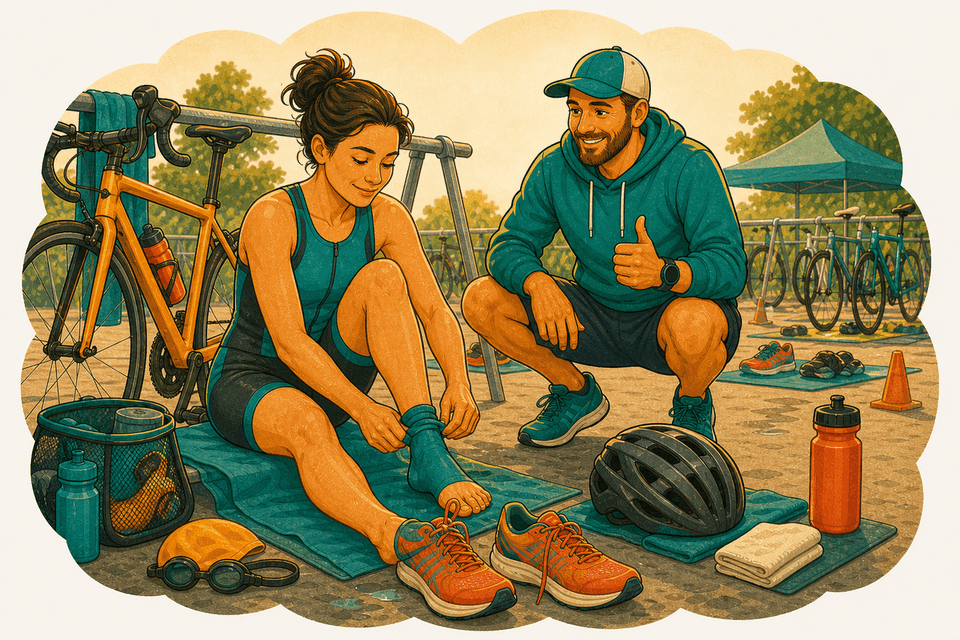
Yes. Wear socks.
For your first triathlon, socks are the right call almost every time. Here is the logic in plain terms. Going sockless can save you a few seconds in transition. That is genuinely true. But a few seconds is not worth spending the back half of your run nursing a hot, raw blister that turns every step into a small negotiation with your own foot.
Your first race is not about shaving seconds. It is about crossing the line feeling strong and proud. Socks help you do that. They are cheap insurance against the one thing most likely to wreck your run, which is a blister you could have avoided.
So if you take nothing else from this article, take this. Beginner plus socks equals a happier race. We can revisit the no-sock life later, once you have a few finishes under your belt.
Why Experienced Racers Skip Socks
I want to be fair to the other side, because you will see fast folks racing barefoot in their shoes and wonder if you are doing it wrong. You are not.
Here is the case they make. In a short race, every second counts, and fumbling with socks over wet feet can eat ten or fifteen seconds across both transitions. For someone chasing a podium spot in a sprint, that matters. Their feet are also conditioned to it. They have done it a hundred times in training, their shoes are dialed in, and they know exactly how their skin behaves when it is damp.
That last part is the key. Sockless racing is a skill you build, not a shortcut you borrow. The people doing it well have practiced it until their feet stopped complaining. If you have not practiced it, race day is the worst possible time to find out how your feet feel about it.
The Blister Problem with Wet Feet
Let me explain why wet feet are the real villain here.
You come out of the swim with damp feet. Even after the bike, they are often still moist from sweat. Now picture skin that is soft and wet rubbing directly against the inside of a shoe for a few miles of running. That friction is exactly how blisters form, and wet skin blisters faster and deeper than dry skin does.
Socks are a simple buffer. They wick a little moisture, they take the rubbing instead of your skin, and they keep that hot spot from ever becoming an open wound. A blister at mile one of a 5k run is a long, sad way to finish a day you trained months for. A thin pair of socks quietly prevents the whole story.
How to Put Socks on Fast Over Damp Feet
The big fear is fumbling. Good news, this is a skill you can practice at home this week, and it makes a real difference. Here is how to make damp socks go on quick.
- Roll them down first. Before the race, roll or bunch each sock down toward the toe like a little doughnut. In transition you slip your toes in and unroll up the foot in one motion, instead of fighting a flat sock.
- Towel your feet. Lay a small hand towel by your shoes and give the bottoms of your feet a quick wipe before the socks go on. Two seconds of toweling saves you ten seconds of struggling.
- Use a little powder. A pinch of talcum powder or cornstarch in each sock helps it slide over damp skin instead of grabbing. Some folks dust their feet too. Try it in training first so you know you like it.
- Sit down if you can. A quick perch on the ground or a towel gives you balance and control. Hopping on one wet foot is how socks get tangled.
Practice this exact sequence a few times in the backyard with wet feet. By race day it will feel automatic, and the time gap between you and a sockless racer basically disappears.
Bike Socks or Run Socks? Just Do It Once
Here is a question that trips beginners up. Do you put socks on for the bike, the run, or both?
Keep it simple. Put your socks on once, in your first transition (that is T1, the move from swim to bike), and leave them on for the rest of the race. There is no rule that says you need fresh socks for the run, and stopping to swap socks in T2 just adds fumbling for no real benefit.
If you are not sure how transitions even flow yet, it is worth understanding the rhythm of the day before you get there. A first race has a lot of moving parts, and the more you rehearse the sequence, the calmer you feel. The same goes for getting comfortable on tired legs, which is exactly what a brick workout trains you for, running right off the bike so your first race-day transition is not a total surprise.
So the answer is, socks go on in T1, and they stay on. One decision, made once, done.
Comfort Beats Speed for Your First Race
I will leave you with the mindset that makes all of this easy.
Your first triathlon is a celebration, not a time trial. You are proving to yourself that you can do the thing. In that context, a comfortable foot is worth far more than a faster split. Nobody remembers their T1 time from their first race. Everybody remembers whether they finished feeling great or limping.
Socks are part of a small, sensible kit that keeps you comfortable so you can enjoy the day. If you want the full rundown of what actually matters, I put together a guide to the gear you actually need, and a more focused look at gear for your first triathlon. Spoiler, it is a lot less than the catalogs want you to believe.
So wear the socks, my friend. Wipe your feet, roll them on, and go have the race you trained for. When you are ready to build toward that first finish line, you can grab a free beginner plan over at couchtotri.com, and we will get you there one comfortable step at a time.