5 min read · with Coach Finn
What Gear Do You Actually Need for Your First Triathlon?
Part of The Gear You Actually Need (and All the Stuff You Can Ignore)
The honest list is shorter than you think
Triathlon has a reputation as a gear sport, all carbon and aero and four-figure price tags. Ignore most of that for your first race. The industry is happy to sell a beginner a bike that costs more than their car. You do not need it.
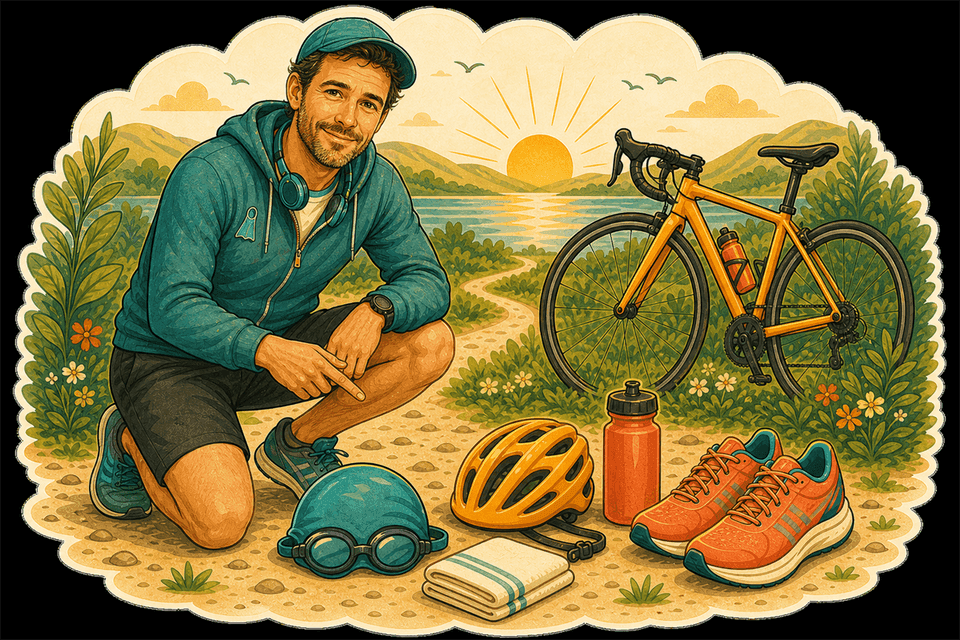
For your first sprint triathlon you need a way to swim, a working bike, a helmet, and shoes you can run in. Almost everything else is optional, borrowable, or a problem for a future you who has already done this once. Let me walk you through what actually matters.
The swim
- Goggles. The one swim item worth buying new and cheap. Get a pair that does not leak and that you have tested in the pool before race day. Anti-fog helps. This is a ten to twenty dollar purchase, not a project.
- Swimwear you can move in. Any swimsuit you can swim laps in is fine. You do not need a tri suit for your first race.
- A swim cap. Open-water races almost always provide a brightly colored cap and require you to wear it. You do not need to buy one.
- A wetsuit, maybe. For a cold open-water swim a wetsuit adds warmth and a lot of helpful buoyancy, which can make an anxious swimmer feel much safer. But you can often rent one, and pool-based or warm-water sprints may not need one at all. Check your race before spending. If you buy nothing else big, a rented wetsuit is the one upgrade that genuinely helps a nervous beginner.
The bike
- Any bike that works. A road bike, a hybrid, a mountain bike, even a borrowed one. For a first sprint, a bike that shifts and brakes reliably is enough. Get it tuned at a local shop if it has been in the garage for years. You do not need a triathlon bike, aero bars, or carbon anything.
- A helmet. This is the one non-negotiable. You cannot race without one, it must fit properly, and it must be buckled before you touch the bike in transition. If you buy exactly one thing for this race, buy a helmet that fits your head well. Replace any helmet that has been crashed.
- A basic flat kit, ideally. A spare tube, a way to inflate it, and the knowledge to use them. Not strictly required to start training, but worth learning before race day so a flat does not end your race.
The run
- Running shoes that fit. Not race-specific, just shoes that are comfortable for you and not worn out. If you are buying a pair, a visit to a running shop for a basic fitting is worth it, mostly to avoid blisters and aches, not to chase speed.
- That is essentially it for the run.
Transition (the small stuff that makes the day smoother)
- A towel to stand on and dry your feet.
- Socks if you want them, though many do short races without.
- An elastic race belt to hold your number, so you do not pin it on. Cheap and genuinely handy, but optional.
- Your shoes, helmet, and goggles laid out in a simple order you have practiced.
What you can skip for your first race
- A triathlon-specific bike or aero wheels.
- A one-piece tri suit (nice later, unnecessary now).
- A bike computer, power meter, or fancy watch.
- Clipless pedals and cycling shoes, unless you already use them comfortably.
- Anything described as race-day or pro-level. You are not racing the pros. You are becoming a finisher.
Borrow, rent, and buy used
The smartest beginner gear strategy is to spend as little as possible until you know you love the sport.
- Borrow a bike from a friend or family member.
- Rent a wetsuit for the season instead of buying.
- Buy goggles and a helmet new (helmets especially, since you want to know the history), and look used or borrowed for everything else.
You can complete and enjoy a first sprint triathlon for very little money. Do not let a gear list be the reason you do not start.
FAQ
Do I need a wetsuit?
It depends on the race. Cold open water makes a wetsuit very helpful for warmth and buoyancy, and the extra float can calm a nervous swimmer. Warm-water or pool swims may not allow or need one. Check your race, and rent before you buy.
Can I use a mountain bike or hybrid?
Yes. For a first sprint, any reliable bike is fine. You will be a little slower than someone on a road bike, and you will still finish and have a great day.
What is the one thing I cannot skip?
A properly fitted, buckled helmet. It is required, it is for your safety, and races will not let you ride without it.
Do I need special clothes for all three sports?
No. You can wear one comfortable outfit you can swim, bike, and run in, or make quick changes in transition. A dedicated tri suit is a convenience, not a requirement.
The bottom line
Goggles, a working bike, a helmet that fits, and decent shoes. That is a triathlete's starter kit. Everything else is optional and can wait until the sport has earned more of your money. Want to tick it off as you go? Use the free beginner triathlon gear checklist.
Coach Finn helps you focus on the training that actually gets you to the finish line, not the gear that does not. Check with a healthcare professional before starting a new exercise program if you have any medical condition or symptom that concerns you.