5 min read · with Coach Finn
Aero Bars for Beginners: Yes, No, or Later?
Part of The Gear You Actually Need (and All the Stuff You Can Ignore)
Hey, it's Coach Finn. If you have spent any time scrolling triathlon photos, you have seen riders hunched low over their handlebars, forearms tucked in, looking fast and serious. That setup involves aero bars, and a lot of new athletes write to me asking if they need a pair before their first race. It is a fair question, and the short version is going to take some pressure off you. So let me walk you through it.
What Aero Bars Actually Are
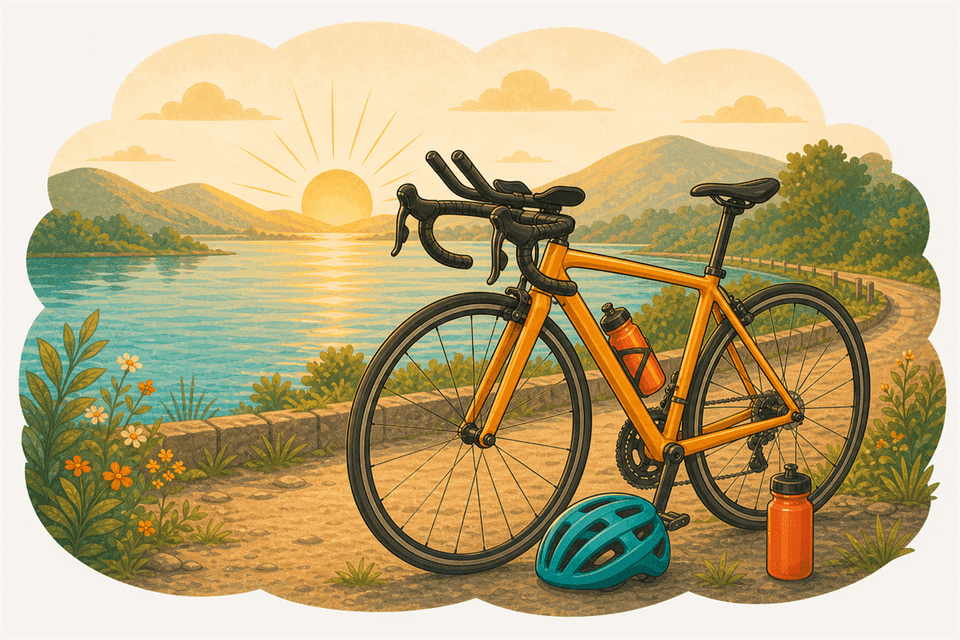
Aero bars are clip-on extensions that attach to the front of your handlebars and reach forward. They come with armrests, so instead of gripping the bars with your hands, you rest your forearms on the pads and hold the extensions out front. This pulls your upper body lower and narrower, which cuts down on wind drag. Less wind hitting your chest means you go faster for the same effort, or you save energy at the same speed.
That is the whole appeal. On a flat, steady stretch of road, an aero position can genuinely make a difference. This is why you see them everywhere at races. But notice what is happening to your body in that position. Your hands are no longer near your brakes. Your weight is shifted forward. Your steering is twitchier. We will come back to that, because it matters a lot for a new rider.
The Honest Answer: No, You Do Not Need Them
I am going to say this plainly so you can stop worrying about it. You do not need aero bars for your first triathlon. Not for the swim, not for the ride, not for the finish line. People complete and enjoy triathlons every single weekend on regular road bikes, hybrids, even mountain bikes with the knobby tires swapped out. The bike does not make the athlete.
On top of that, some beginner-friendly races actually restrict or discourage aero bars in certain categories, often for safety reasons in crowded fields. So before you spend a dollar, check your race rules. There is a decent chance the decision gets made for you, and that is fine. For your first season, aero bars are a "later" thing at most, and a "never needed" thing for plenty of happy triathletes.
Where your money and attention should go first is simple. A helmet that fits well and a bike that is safe and comfortable to ride. If you want the full rundown on that, I put it all in the gear you actually need. Start there, not in the aero bar aisle.
The Real Tradeoff Nobody Mentions
Here is the part that gets glossed over in all those glossy race photos. Aero bars give you a real benefit and a real cost, and for a brand-new rider the cost is bigger than the benefit.
The benefit is energy and time on flat, steady riding. The cost is control. When your forearms are on the pads and your hands are out front on the extensions, you cannot reach your brakes quickly. Your steering inputs feel sharper and less forgiving. Hitting a pothole, a gust of wind, or a surprise gravel patch in that position is a lot harder to manage than it is with your hands on the regular bars.
If you are still getting comfortable on the bike, still a little nervous in traffic, or still working on riding in a straight line while you grab your water bottle, aero bars add risk you do not need yet. The few minutes they might save you are not worth a crash. A confident, comfortable rider on regular bars beats a tense, wobbly rider in an aero tuck every time. If you are returning to cycling after some years away, give yourself even more grace here. I wrote about easing back into it in getting back on a bike for triathlon, and the same patience applies.
How to Add Them Later, Safely
Let's say you finish a race or two, you are loving the sport, and you want to chase a little more speed. Great. Aero bars can be a smart upgrade once you have the handling to back it up. Here is how I would add them without scaring yourself or risking your skin.
Get a fit first. A good bike shop can install clip-on aero bars and adjust your position so you are not overreaching or jamming your knees into your chest. A bad position is slow and uncomfortable and can nag at your neck and back, so this is worth doing right.
Then practice somewhere empty and safe. An empty parking lot, a quiet bike path with no cross traffic, a closed road. Stay far away from cars while you learn. Practice getting into the aero position and getting back out of it smoothly, because you will pop out of it constantly for turns, hills, and intersections. Practice braking from the regular bars over and over until reaching them is automatic. Do not ride in aero through corners or anywhere you cannot see well ahead.
Build it up slowly. A few minutes in the position, then back to the bars. Longer stretches as you get comfortable. By the time you race in it, getting low should feel boring, not thrilling. That is the goal.
One quick note. I am a coach, not a doctor. If you have neck, shoulder, or back issues, talk to a medical professional before you commit to a low aero position.
What Actually Makes You Faster as a Beginner
I want to leave you with the thing that matters most. For a new triathlete, bike handling and comfort beat aerodynamics by a mile. Being able to ride relaxed for the full distance, fuel and drink without panicking, take a corner cleanly, and brake with confidence will do more for your race than any clip-on bar. Those skills also keep you safe, which is the whole point.
So spend your early energy on riding more, getting comfortable, and dialing in your fit. If you are still piecing together your setup for race day, gear for your first triathlon covers what is worth having and what can wait. Aero bars will still be there next season, and you will be a far better rider when you reach for them.
You do not need to be fast to start. You just need to start. We will get you there at couchtotri.com, one comfortable, confident ride at a time. See you out there.