5 min read · with Coach Finn
Do I Really Need a Tri Suit, or Can I Improvise?
Part of The Gear You Actually Need (and All the Stuff You Can Ignore)
If you have started shopping for your first triathlon, you have probably seen them. Those sleek, one-piece outfits that hug everything, cost more than your monthly grocery bill, and seem to be on every athlete at the start line. And somewhere in the back of your mind a little voice is asking, "Do I actually need one of those, or can I get away with what I have?"
I love this question, because the answer is going to save you money. Let me walk you through it.
What a Tri Suit Actually Is (and Why People Like Them)
A tri suit is a single piece of athletic clothing designed to do all three triathlon sports without a costume change. You swim in it, you bike in it, you run in it. That is the whole pitch.
It earns its fans for a few honest reasons. It is made from quick-dry fabric, so it sheds water fast after the swim and you are not jogging around in a soggy outfit. It has a thin chamois (that is the little pad in the seat) that gives you a bit of cushion on the bike without being so thick that it bloats up like a diaper when wet. It is snug and light, so nothing flaps around or chafes. And because it is one piece, you do not waste time in transition wrestling with shorts and shirts while your fingers are wet and shaky.
So yes, tri suits are genuinely nice. They solve real problems. But "nice" and "necessary" are two very different things.
The Honest Answer: No, You Do Not Need One
Here is the truth I tell every beginner. You do not need a tri suit for your first triathlon. Not for a sprint, not for a pool race, not for your local beginner-friendly event. People finished triathlons happily for decades before tri suits were a thing, and plenty still do today in regular workout clothes.
Your first race is about one goal: crossing the finish line and learning what race day feels like. You will learn a hundred small things about transitions, pacing, and nutrition that no outfit can teach you. Spending a chunk of money on specialized clothing before you even know if you love the sport is the kind of thing I gently steer people away from. Start with what you have. You can always upgrade later once you know this is your thing.
If you want the bigger picture on this, I put together a full guide on the gear you actually need so you can tell the must-haves from the nice-to-haves.
What to Improvise With Instead
Good news: you almost certainly own most of what you need already. Here are the setups that work beautifully for a first-timer.
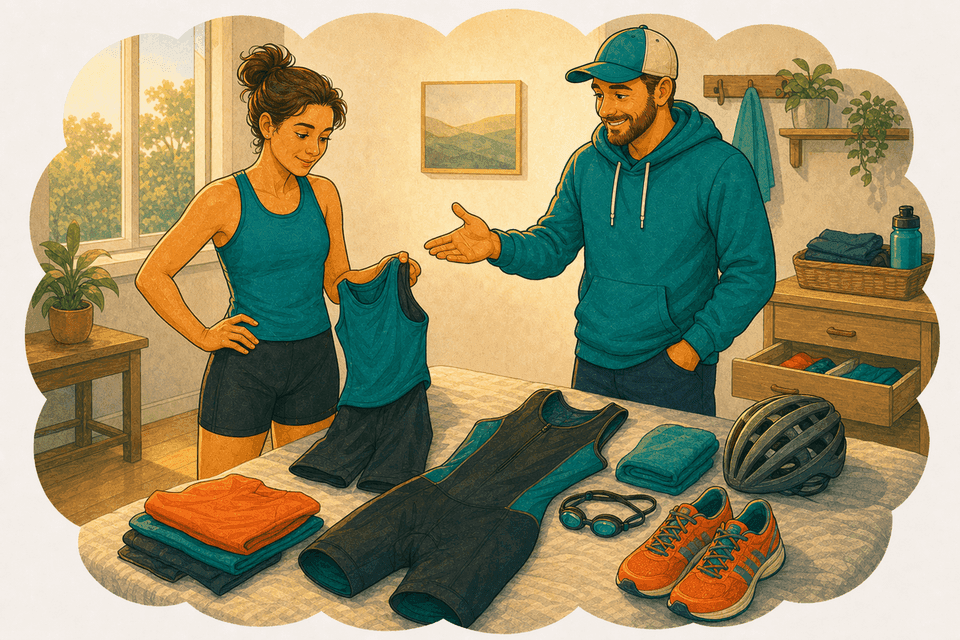
A pair of tri shorts plus a snug top. If you want to buy just one thing, tri shorts are the smart pick. They have a light chamois, they dry fast, and they cost a fraction of a full suit. Pair them with a fitted tank or technical tee and you are set for swim, bike, and run.
A swimsuit under shorts, great for pool races. Lots of first triathlons are pool swims, which makes this even simpler. Wear your regular swimsuit, then pull on a pair of fitted athletic shorts and a top in transition after the swim. Done.
Fitted, quick-dry athletic wear you already own. That moisture-wicking running shirt and those snug gym shorts or leggings will carry you through race day just fine. The magic words are fitted and quick-dry.
If your race involves open water and a wetsuit, you will also want to think about what goes underneath it. I cover that in what to wear under a triathlon wetsuit so nothing surprises you on the morning of.
What to Avoid (This Part Matters More Than the Suit)
What you skip is more important than what you buy. A few things will genuinely make your day harder, so steer clear of these.
Cotton. Cotton soaks up water and sweat and holds onto it. A wet cotton shirt gets heavy, cold, and chafes like sandpaper. Choose synthetic, quick-dry fabric instead.
Loose, flappy clothing. Baggy shirts and shorts billow up in the water, snag on your bike, and slow you down. Snug and fitted is your friend.
Regular underwear. Cotton briefs under your shorts are a recipe for soggy misery and chafing. Go without, or wear a swimsuit or tri shorts that are designed to be worn on their own.
Heavy padded bike shorts. Those thick, cushy cycling shorts feel great on a long ride, but the dense pad acts like a sponge in the swim. It soaks up water and stays squishy for the whole bike and run. The thin chamois in tri shorts exists exactly to avoid this.
For a fuller rundown of the head-to-toe basics, peek at my list of gear for your first triathlon.
When a Tri Suit Becomes Worth Buying
So when does a tri suit earn its place in your bag? Usually after that first race, once you have caught the bug and you know you are coming back for more.
A tri suit starts to make real sense when you are racing more often, when you want to shave seconds in transition, when your distances get longer and comfort matters more, or simply when you have decided this sport is part of who you are now. At that point it is a reward, not a requirement. Buy it because you earned it, not because the start line made you feel like you had to.
Plenty of athletes also wait until they find one on sale at the end of a season, which is a perfectly smart move. There is no rush.
Start With What You Have
Here is what I want you to take away. Your first triathlon does not care what you are wearing, as long as it is snug, quick-drying, and comfortable. The finish line looks exactly the same whether you crossed it in a three-hundred-dollar suit or in the gym clothes already in your drawer.
So pull together what you own, fill any small gap with a pair of tri shorts if you like, and save your money for the race entry and a celebratory meal afterward. You have got this.
If you want a gentle, beginner-friendly path from your couch to that finish line, come grab a free plan at couchtotri.com. I would love to help you get there.