5 min read · with Coach Finn
I Registered for a Triathlon. Now What?
Part of Race Week and Race Day: A Calm Walk to the Start Line
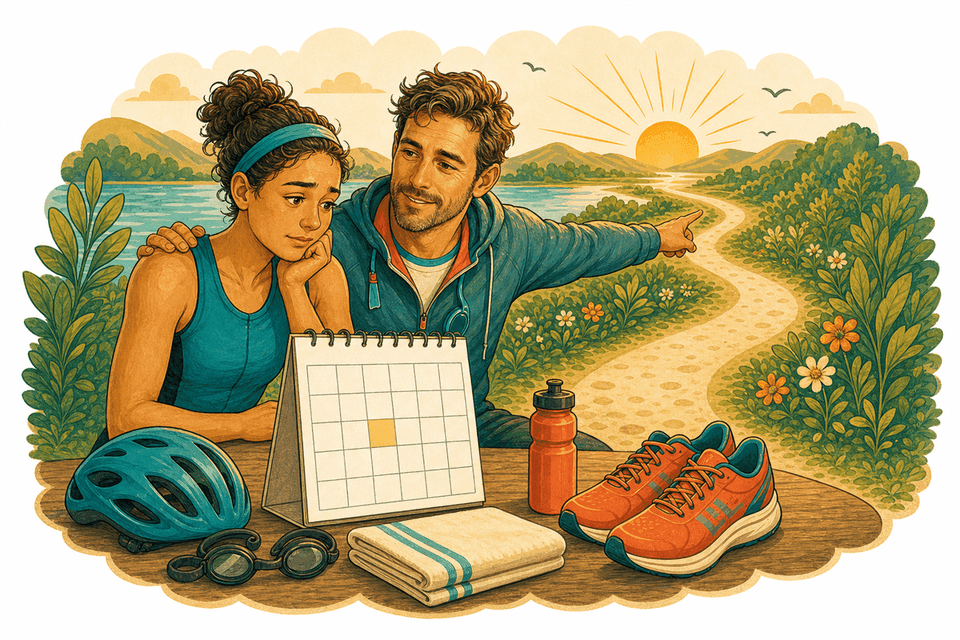
First, breathe. You did the hardest part.
Signing up is the moment most people never reach. The nerves you are feeling right now are not a warning sign. They are proof you committed to something that matters to you. So before anything else: well done. The rest is just a series of small, doable steps, and we are going to lay them out in order so the whole thing stops feeling like a fog.
Step 1: Read your race athlete guide
Every race publishes an athlete guide or race information page. Find it and read it once now, then again closer to the day. Look for:
- The exact distances for the swim, bike, and run.
- Whether the swim is a pool or open water, and the water temperature or wetsuit rules.
- The date, start time, and location, including where to park.
- Any cutoff times.
- What is provided (swim cap, aid stations, body marking) and what you bring.
This single document removes most of the unknowns that fuel race-day anxiety. Knowledge is the antidote to dread.
Step 2: Know your distances, and respect them honestly
If this is a sprint, you have picked the right first race. A sprint is real, but it is sized to be a beginner's first mountain, not an impossible one. If you accidentally registered for something longer, like a 70.3, and you are starting from very little, read how long it really takes to build to a triathlon and consider whether a shorter first race would serve you better. There is no shame in choosing the race that sets you up to succeed.
Step 3: Build a plan that starts where you are
You do not train for a triathlon by going as hard as you can and hoping. You build, gently and consistently, across all three sports.
- The swim starts with calm and breathing, not laps, especially if you are nervous in water.
- The run starts as run-walk intervals, not continuous running.
- The bike is the forgiving leg that quietly builds your endurance.
A good plan adds a small, safe amount each week and includes rest. This is exactly what Coach Finn builds for free, starting from your real fitness and the days you can actually train. The plan is the difference between arriving at the start line confident and arriving terrified.
Step 4: Practice the things that are not fitness
Some of race day is fitness. A surprising amount is just rehearsal.
- Practice the swim you will actually do. If it is open water, get supervised open-water practice before the day. If it is a pool, know the lane rules.
- Practice transitions. The change from swim to bike and bike to run, called transition, feels chaotic the first time. Practice laying out your gear and moving through it a few times at home or after a workout. It calms the nerves enormously.
- Practice your fueling. Figure out what you will eat and drink before and during the race, and never try anything new on race day.
Step 5: Race week
The week before, you rest more than you train. This is normal and correct, even though it can feel like you are losing fitness. You are not. You are arriving fresh.
- Keep workouts short and easy.
- Sleep well, especially two nights before (the night before, nerves often interfere, so the night before that matters most).
- Lay out and check your gear early. Use your athlete guide as a packing list.
- Plan your travel, parking, and arrival time with a generous buffer.
Step 6: Race morning
- Eat a familiar breakfast you have practiced, with enough time to digest.
- Arrive early. Rushing is the enemy of calm.
- Set up your transition area simply: helmet, then bike shoes or run shoes, goggles, in the order you will use them.
- Do a short, easy warm-up if allowed.
- Then start calm. The swim is where nerves do the most damage. Go easy, breathe out into the water, and let your race come to you.
The mindset that carries you
Your only job on race day is to finish, safely, and let yourself feel proud. Not to be fast. Not to beat anyone. If you find yourself worrying about being last, read will I finish last in my first triathlon, because that fear is almost always bigger than the reality.
FAQ
How long do I have to train?
It depends on your starting point and the race, but most beginners can build to a first sprint in a few months of consistent, gentle training. Start as soon as you can and be consistent rather than heroic.
What is a transition?
It is the area where you switch between sports, and the act of switching. Swim to bike is the first transition, bike to run is the second. A few practice runs at home make it feel routine instead of frantic.
What if I am not ready by race day?
Then you adjust. You can walk more of the run, take the swim slowly with rest, and still finish. Or, if you genuinely are not ready, there is no shame in deferring to another race. Your safety and your long-term love of the sport matter more than one date.
Should I be eating or drinking something special?
Nothing exotic, and nothing new on race day. Practice your pre-race meal and your during-race fluids in training so race day holds no surprises.
The bottom line
You registered. Now you read the guide, build a gentle plan, rehearse the non-fitness parts, taper into race week, and start calm. Broken into steps, the scary thing becomes a checklist.
Coach Finn turns all of this into a personal plan that starts exactly where you are and walks you to the start line ready. Check with a healthcare professional before starting a new exercise program if you have any medical condition or symptom that concerns you.