5 min read · with Coach Finn
Indoor Cycling Apps for Beginners: Do You Need Zwift?
Part of Cycling From Zero, When You Have Not Ridden Since Childhood
Let me give you the honest answer first, because I think you deserve it before any sales pitch: no, you do not need Zwift or any other app to train indoors. A basic bike, an indoor trainer, and a simple timer will get you fit and ready for race day. People built strong cycling legs for decades before these apps existed, and you can too.
So why does everyone talk about them? Because indoor riding can be mind-numbingly boring, and apps are very good at fixing that one specific problem. That is the whole story, really. Let me walk you through it.
What These Apps Actually Do
Zwift is the famous one, but it is part of a whole category, and they mostly do a few things:
- Structured workouts. The app tells you when to push hard and when to ease off, often with a coach voice or on-screen cues. You just follow along instead of inventing a session yourself.
- Virtual worlds and games. You ride through a colorful digital world, your avatar pedaling up hills and past other riders. It turns a workout into something closer to a video game.
- Follow-along sessions. A real instructor leads a class, a bit like a spin studio piped into your living room.
- Social rides. You can ride "with" other people online, join group sessions, or chase friends. For some folks, that connection is the thing that gets them on the bike.
None of this makes you faster than plain old pedaling would. What it does is make the time pass, and that matters more than beginners expect.
What You Need to Use One
Here is where people get nervous about cost, so let me lay it out plainly. To use most of these apps you need:
- A bike. The one you already have is fine. If you are still nervous about riding, start with getting comfortable back on a bike before you worry about screens and apps.
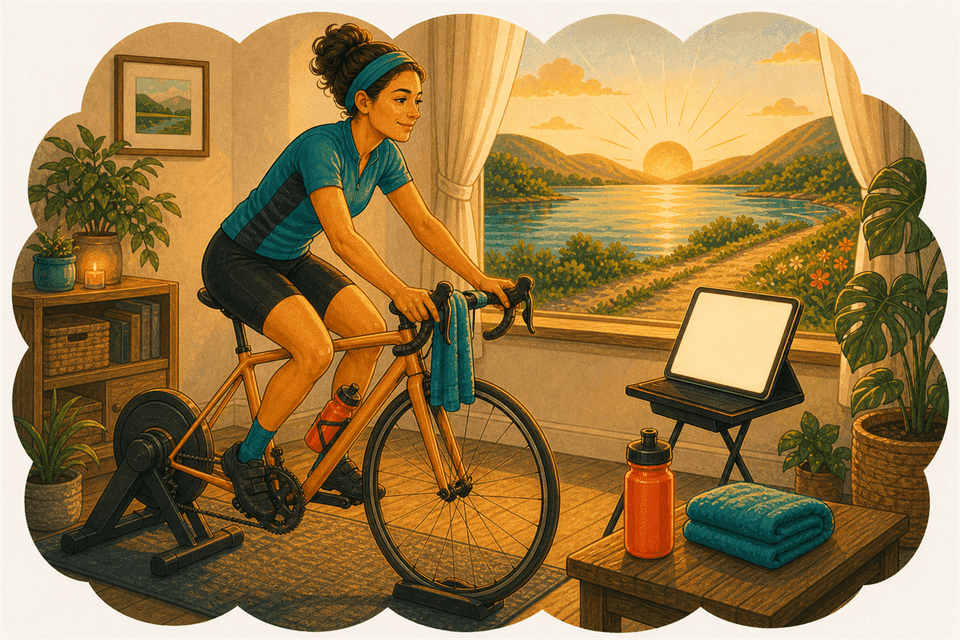
- An indoor trainer. This is the stand that holds your bike still and lets you pedal in place.
- Ideally a smart trainer or a speed/cadence sensor. A smart trainer talks to the app and can even adjust resistance for you. A cheaper option is a small speed or cadence sensor that clips to your bike and sends your data over.
- A phone, tablet, or computer to run the app and show the screen.
- A subscription, usually a monthly fee, for the bigger apps.
If that list feels like a lot, take a breath. You do not need the fanciest version of any of it, and you certainly do not need it to start. For a clear picture of what is truly essential versus nice-to-have, see the gear you actually need for your first triathlon.
The Real Benefit for Beginners
Let me be specific about who these apps help most, because it is not who you might think.
The benefit is not speed. It is consistency. Most beginners do not fall short because they trained wrong. They fall short because life got busy, winter got dark, the weather turned ugly, and the indoor trainer felt like a punishment, so they skipped it.
This is exactly where an app earns its keep. When riding in place is genuinely fun, or at least distracting, you show up more often. You ride through the dark months instead of disappearing in November and panicking in March. A boring half hour you skip is worth nothing. A fun half hour you actually do is worth everything. For a lot of beginners, that single shift is the whole reason to consider paying for one.
Cheaper and Free Alternatives
Now the part the app companies will not lead with: you have good options that cost little or nothing.
- YouTube follow-along rides. Search for indoor cycling or "turbo trainer" workouts and you will find hours of free, instructor-led sessions, scenery, and music. Prop up your phone and pedal along. It is honestly excellent.
- Free app tiers. Several apps, including some big names, offer a free level or a trial. You can sample the experience before you ever pay a cent.
- Just music and intervals. Build a playlist you love, set a timer, and ride hard for a song, easy for a song. Simple, free, and it works. This is how a lot of strong riders still train.
While you are pedaling away on any of these, it is a perfect low-stakes moment to practice a small race skill: learning how to drink from a bottle while cycling without wobbling. Your living room is a much friendlier place to fumble a water bottle than a road.
So, What Should You Do?
Start simple. Get on the trainer with a timer or a free YouTube ride and see how you feel. If you find yourself riding happily and staying consistent, wonderful, you have saved yourself a monthly fee.
If, on the other hand, boredom is the thing standing between you and your training, that is your signal. That is the one problem these apps solve beautifully, and it is a perfectly good reason to try one. Many offer a free trial, so you can find out before committing.
Notice the order here. You add the app to fix a specific problem (boredom), not because you assume you must have it. Tech is never the barrier to becoming a triathlete. You are not behind because you do not own a smart trainer.
You and a bike are enough to begin. Everything else is just a tool you reach for when it helps, and never a requirement to feel like you belong. Whenever you want more honest, no-pressure guidance like this, come find us at couchtotri.com. We will be right here, cheering you on from your very first wobbly ride to your finish line. You have got this.