5 min read · with Coach Finn
Plus-Size Triathlon Race-Day Comfort: Gear, Chafing, and Belonging
Part of The Fear of Finishing Last
If you are a bigger beginner, you may not be asking, "Can my body do this?" You may be asking a more practical question: "How do I get through race day without my clothes rubbing, my bike feeling awful, or my nerves telling me I do not belong?"
That is a real question. It deserves real answers.
You do not need to shrink yourself before you start. You need gear that fits, a plan that respects your joints, and a race-day setup that lets you focus on moving forward instead of managing discomfort.
Fit Comes First
The best triathlon gear for a plus-size beginner is not the fanciest gear. It is the gear you forget about while you are moving.
If a one-piece tri suit feels great, wonderful. If it pulls, rolls, or makes bathroom logistics stressful, skip it. Many bigger beginners are more comfortable in separate tri shorts and a tri top, a fitted swim shirt, or jammers and a sports bra or supportive top that can handle water. You are allowed to build a setup that works for your body instead of forcing your body into the setup the internet shows most often.
Look for fabric that sits smooth when wet, waistbands that do not cut in, and tops that stay down when you raise your arms. Bend, sit on the bike, jog in place, and practice a few deep breaths before race day. If something digs in during a living-room test, it will not become kinder after a swim.
If swimwear is the part making you hesitate, this guide on what to wear when you are self-conscious in a swimsuit walks through more covered options without pressure.
Make an Anti-Chafe Plan Before Race Morning
Chafing is not a character flaw. It is skin, salt, water, fabric, and repetition. Bigger bodies often have more places where skin or seams meet, so it is smart to plan for it early.
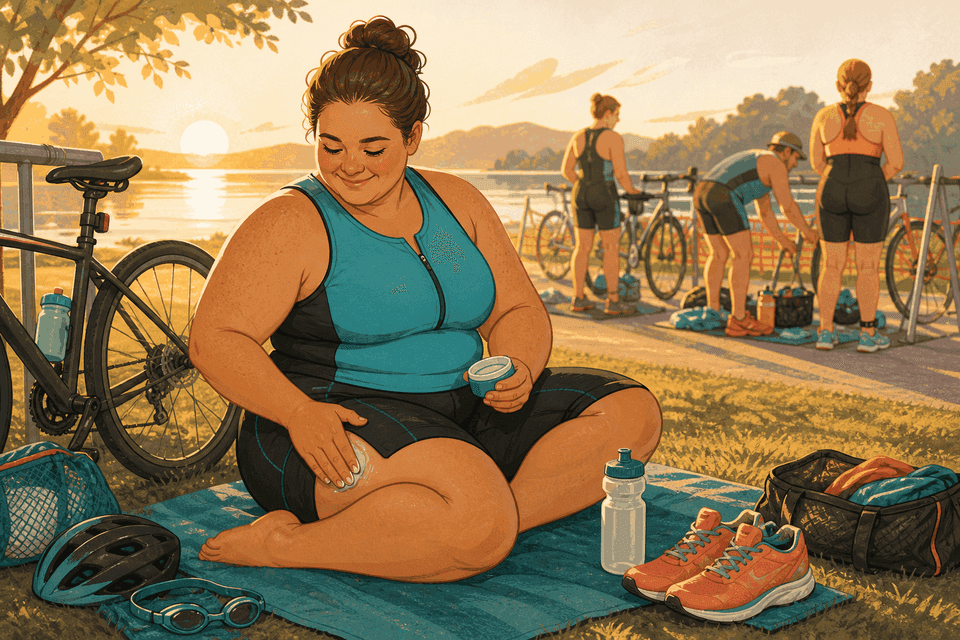
Use anti-chafe balm in training, not for the first time on race day. Test it around inner thighs, under arms, under a sports bra band, around the neck if you wear a wetsuit, along waistbands, and anywhere your clothing edge touches skin. Reapply in transition if you know a spot tends to flare.
The goal is not to tough it out. The goal is to remove one more reason your brain might say, "I never want to do that again." I wrote a full practical guide to anti-chafe balm for triathlon if you want the exact spots and race-day routine.
Use the Bike to Be Kind to Your Joints
The bike is your friend. It lets your heart and lungs work while the saddle supports your body weight, which is one reason triathlon can be more welcoming than running alone.
On hills, stay seated as long as you can and shift early into an easier gear. Standing climbs can feel dramatic, but seated climbing is often steadier, kinder, and more efficient for a beginner. Your job is not to attack the hill. Your job is to keep pressure smooth and breathing calm.
If the hill gets too steep, it is okay to walk the bike briefly in a safe place. That is not a moral failure. It is a pacing choice. The same spirit applies on the run: run-walk is real training, and walking a hill can be the smartest way to protect your effort budget.
For the bike side, start with what gear to use when climbing hills. For the run side, walking hills in a triathlon is far more normal than beginners think.
Practice the Whole Outfit Once
Before race week, do one short practice where you wear the exact clothing plan:
- Get it wet.
- Sit on the bike.
- Walk or jog for ten minutes.
- Notice rubbing, rolling, pinching, and support.
- Fix the annoying thing now.
This does not need to be a heroic workout. It is a comfort rehearsal. Ten awkward minutes in the wrong shorts can save you an hour of race-day irritation.
About Being the Largest Person There
Let us say the quiet part kindly. You may worry that you will be the largest person at the race.
Maybe you will not be. Beginner triathlons include far more body types than marketing photos show. You will see older athletes, bigger athletes, nervous athletes, slow swimmers, walkers, hybrid bikes, mountain bikes, and people who are quietly hoping nobody notices how scared they are.
And if you are the largest person there on that particular morning, you still belong there.
Your body does not need to look like anyone else's body to earn the start line. The race is not a body inspection. It is a course. You move through it at the pace that keeps you safe, steady, and proud.
If the bigger question is whether triathlon is possible in a bigger body, start with can I do a triathlon if I am overweight. The short answer is yes. This page is the practical comfort plan that helps yes feel more believable.
Choose a Race That Welcomes Beginners
Race choice matters. Look for a local Sprint, a pool swim if open water feels like too much right now, clear cutoff times, and beginner-friendly language on the event page. Smaller community races often feel calmer than huge events because logistics are simpler and volunteers have time to help.
Bring a support person if you can. Not because you need rescuing, but because having one familiar face at the finish can quiet a lot of noise.
Your First Finish Is Allowed to Be Comfortable
You do not have to prove you can suffer. You are allowed to choose the shorts that fit, the shirt that covers you, the balm that prevents rubbing, the seated climb, the walk break, and the beginner race that feels kind.
That is not lowering the bar. That is building a first triathlon you can actually finish and want to remember well.
Coach Finn can build your first plan around the body, gear, time, and confidence you have right now. If you want the next step, start here, then use the Race Readiness Path to make race day feel less mysterious.