6 min read · with Coach Finn
What Do I Wear if I'm Self-Conscious in a Swimsuit?
Part of The Fear of Finishing Last
If the thought of standing around in a swimsuit is the main thing keeping you from signing up for a triathlon, I want you to know something right away: you are not alone, and this is not a small or silly worry. It stops a lot of people. It should not, and by the end of this post I hope you will see why.
Let's talk about it honestly, and then let's talk about exactly what you can wear so you feel covered, comfortable, and like yourself.
You Are Not the Only One Thinking About This
Feeling exposed in swimwear is one of the most common reasons people quietly decide a triathlon is "not for them." They never say it out loud. They just scroll past the sign-up button. So if that is you, please know your feeling is incredibly normal, and it is shared by far more people than you would ever guess from the outside.
Here is the part I really want you to hear: this worry is almost always bigger in your head than it is in real life. The fear of being looked at is doing a lot of heavy lifting, and it rarely matches what actually happens on race day.
The Freeing Truth: Nobody Is Looking at Your Body
I have stood at a lot of start lines, and I can tell you what people are actually doing there. They are checking their goggles. They are wondering if they remembered to start their watch. They are nervous about the swim, the cold water, the crowd, their own race. Every single person is wrapped up in their own head.
Nobody is standing there evaluating your body. They are too busy being anxious about themselves to spare a thought about how anyone else looks. That is not me being nice. That is just how it is.
And triathlon, of all sports, has a culture that is famously warm to every shape, size, and age. You will see bodies of all kinds out there: round ones, thin ones, old ones, young ones, bodies that have had surgeries and babies and decades of living. Nobody blinks. People cheer for the person finishing last as loudly as the person finishing first. If you are worried about that part too, read why you will not actually finish last, because that fear deserves the same gentle reality check.
The same goes for the idea that your body somehow has to look a certain way to belong here. It does not. You can read more about how you can absolutely do a triathlon if you are overweight, because the start line has room for exactly the body you have right now.
Options That Help You Feel Covered and Comfortable
Now for the practical part, because feeling covered is a completely valid thing to want, and the good news is you have plenty of choices. You do not have to wear a thin swimsuit and nothing else. Most triathletes do not.
Here are some options that help you feel more covered:
- Tri shorts and a tri top. This is the most common setup you will see. The shorts cover you from waist to mid-thigh, the top covers your torso and shoulders, and both are made to swim, bike, and run in. Together they cover far more than a swimsuit.
- A one-piece tri suit. This covers your whole torso in one smooth piece, with no waistband and nothing riding up. Many people find it the most comfortable and the most flattering, and it takes the guesswork out of matching pieces.
- Swim leggings or jammers. If you want your legs covered, leggings go to the ankle and jammers go to the knee. Both are completely normal pool and race wear.
- A swim shirt or rash guard. A fitted long or short sleeve top adds coverage over your arms, shoulders, and back, and it also gives you sun protection. You can wear one right over your tri shorts.
- A wetsuit. If your race allows it, a wetsuit covers you from neck to wrist to ankle. It also makes you more buoyant and keeps you warmer, so it helps your swim and your comfort at the same time.
- Darker colors. This is a small thing, but a lot of people simply feel more at ease in black or deep navy than in bright or light fabrics. Pick what makes you feel good.
If you are not sure whether to invest in dedicated gear at all, this companion post on whether you need a tri suit walks through it without any pressure to spend money you do not want to spend.
Comfort and Chafing Matter More Than Looks
Here is something I tell every beginner, and it quietly solves the clothing question on its own: choose your gear for comfort first, not for looks.
When you are moving through three sports and changing between them, the things that actually affect your day are fit and chafing. A seam in the wrong place, a fabric that holds water and rubs, a top that rides up: these are the things that make a long morning miserable. Wet fabric against skin for an hour can chafe badly, so anti-chafe balm and well-fitting gear are real, practical friends.
The lovely side effect is that the same choices that prevent chafing, snug, smooth, made-for-the-job gear, also tend to be the ones that make you feel held together and covered. When you stop dressing for how you look and start dressing for how you feel while moving, the self-consciousness tends to fade into the background where it belongs.
Your Body Is Allowed to Be Exactly As It Is
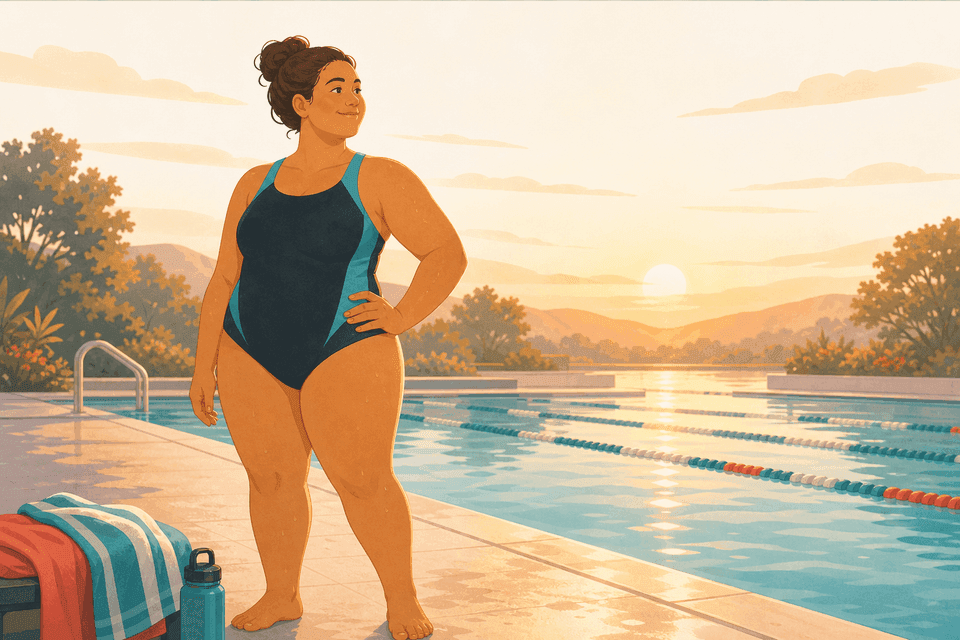
I want to leave you with this. You do not have to earn your place at the start line by changing your body first. You do not have to wait until you look a certain way. The version of you that exists today, right now, is allowed to show up, wear what feels good, and do this hard and wonderful thing.
Wear the tri suit, the leggings, the rash guard, the wetsuit, the dark colors, whatever lets you breathe easy and focus on the race instead of the mirror. Cover as much or as little as you like. It is your call, and there is no wrong answer.
Your body belongs in this sport exactly as it is. When you are ready, we will be right here at couchtotri.com to help you take the first step, in whatever you feel good wearing. I cannot wait to cheer you on.