5 min read · with Coach Finn
What Does a Triathlon Actually Cost (Beyond the Bike)?
Part of The Gear You Actually Need (and All the Stuff You Can Ignore)
Let me guess. You typed "how much does a triathlon cost" into a search bar, and the results made your stomach drop. Five thousand dollar bikes. Carbon wheels. Wetsuits that cost more than your rent. Take a breath. That is not the real story, and I want to walk you through the honest version.
The triathlon you see in magazines is the expensive hobby of people who have been doing this for years. The triathlon you are about to start is a far cheaper, friendlier thing. Most of what you need, you may already own. So let us lay it all out plainly, no sticker shock, no gatekeeping.
The two costs you truly cannot avoid
Here is the whole truth up front. There are exactly two things you must spend new money on: your race entry fee and a bike helmet.
A first Sprint entry fee usually lands somewhere between $60 and $120, depending on the race and how early you sign up. Register early and you pay less. A helmet, the kind required by every race for safety, runs about $40 to $60 brand new. That is it. Those two items are the genuine floor of this sport.
Everything else on the list below is something you can borrow, buy used, or already have sitting in a closet.
The gear, and why most of it is free for you
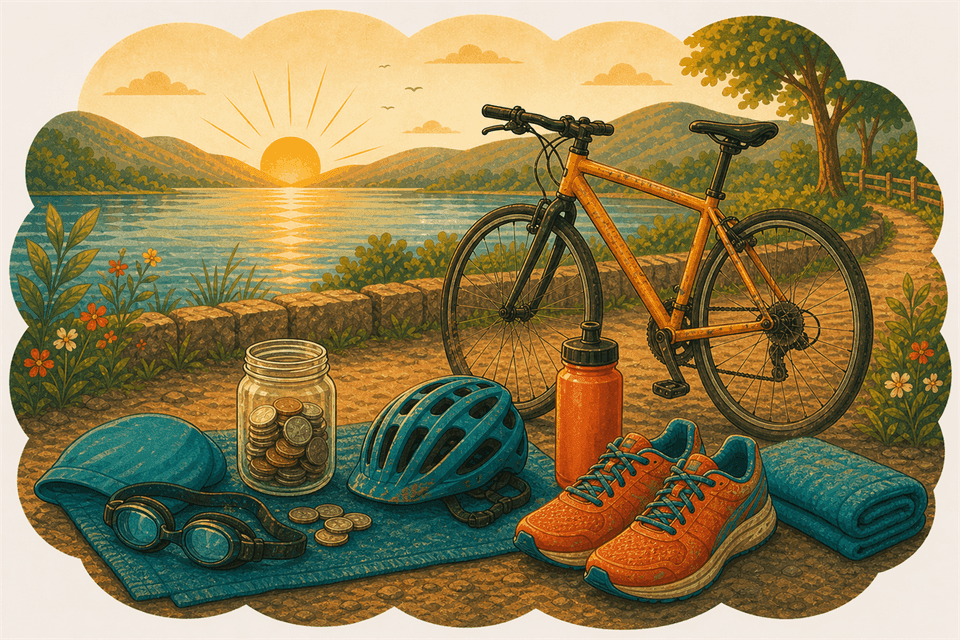
People assume triathlon means a garage full of equipment. For a Sprint, here is what you actually use:
- Goggles for the swim: $15 to $25.
- A swimsuit or tri shorts: you likely own something that works.
- A bike: any working bike will do. Your old hybrid, a mountain bike, a borrowed road bike. Nobody at your first race will care.
- Running shoes: the ones you already walk or jog in are fine to start.
- A helmet: covered above.
Notice how short that list is. If you already own a bike and a pair of sneakers, your only new purchases are a helmet and goggles, which together come to under $90. I have a full walkthrough of the gear you actually need for your first triathlon if you want the detailed version, and a guide on how to build a tri kit for under $300 for when you are ready to add a few nicer pieces.
A rough first-Sprint budget
Let me put real numbers on it. Here is a ballpark for someone starting close to scratch:
| Item | Rough cost |
|---|---|
| Race entry (Sprint) | $60 to $120 |
| Helmet | $40 to $60 |
| Goggles | $15 to $25 |
| Bike | $0 if borrowed or owned |
| Running shoes | $0 if owned |
| Swimsuit or tri shorts | $0 to $40 |
So a realistic first triathlon, if you lean on what you own, costs somewhere around $115 to $245 all in. That is a weekend hobby, not a luxury purchase. And if you have to buy a used bike, a perfectly good one runs $150 to $400 on the secondhand market, far less than the showroom numbers that scared you.
The recurring costs people forget to mention
Honesty means telling you about the ongoing stuff too, because this is where budgets quietly creep.
Pool or gym access. If you do not have open water nearby, you will likely swim at a pool. A day pass is often $5 to $10, and a monthly membership runs $30 to $80. This is the cost most beginners overlook, so plan for it.
Shoes wear out. Running shoes last roughly 300 to 500 miles, so once or twice a year you may replace a pair at $80 to $130.
More race entries. This one is a happy problem. If you catch the bug, each new race is another entry fee. Budget for the races you actually want to do, not every race that exists.
A wetsuit, maybe. Only if your races are in cold open water. You do not need one for a pool Sprint. When the time comes, I wrote a whole piece on whether to rent or buy a wetsuit so you can decide without overspending.
How to keep it genuinely cheap
You have more levers here than the marketing wants you to believe.
- Borrow first. A friend's bike, a buddy's old goggles. Ask around before you buy anything.
- Buy used. Bikes, trainers, and gear hold up well secondhand. Local marketplaces and club swap meets are goldmines.
- Train outside for free. Running and outdoor cycling cost nothing. Lean on them while you build fitness.
- Use what you own. That closet swimsuit, those walking shoes, the bike in your garage. They count.
- Register early. Entry fees climb as race day nears. Early sign-up is the easiest money you will ever save.
The takeaway
Triathlon is far cheaper to start than the sport's marketing implies. The unavoidable new costs are an entry fee and a helmet, full stop. Everything beyond that is optional, borrowable, or already yours.
And here is the part I love most: you only scale up your spending if you fall in love with the sport. Nobody hands you a bill for fancy gear on day one. You start with what you have, you cross that first finish line, and then, only if you want to, you slowly add the things that make it more fun. The expensive version of this sport is a choice you earn into, not a toll you pay at the gate.
So do not let a price tag in a magazine talk you out of the starting line. You can afford this. You can start this. And when you are ready to take the next step, we have a whole library of beginner-friendly guides waiting for you at couchtotri.com. I will be cheering you on the whole way.