6 min read · with Coach Finn
Should I Rent or Buy a Wetsuit for My First Triathlon?
Part of The Gear You Actually Need (and All the Stuff You Can Ignore)
Hey, it is Coach Finn. If you are staring down your first open-water swim and wondering whether to drop a few hundred dollars on a wetsuit or just borrow one, take a breath. This is one of those questions that feels huge but actually has a pretty simple answer for most beginners. Let me walk you through it like we are standing on the beach together, coffee in hand, before the gun goes off.
First, Do You Even Need a Wetsuit?
Before we talk rent versus buy, let us make sure you need a wetsuit at all. Plenty of first-timers do not.
If your race is in a pool, you almost certainly do not need one. Pool water is warm, and most pool-based races do not allow wetsuits anyway. So if you signed up for a sprint at the local rec center, you can skip this whole decision and put your energy elsewhere.
Wetsuits come into play for open water that runs cold. Lakes, rivers, bays, and oceans can be a lot chillier than the pool you trained in, and that cold is no joke for comfort and confidence. Most race organizations set a water temperature cutoff (often somewhere around 78 degrees Fahrenheit for wetsuit-legal status, with rules shifting above that). The exact number and the rules vary by the governing body and the event, so do not guess.
Here is your homework. Pull up your race's athlete guide and look for two things: the wetsuit policy and the expected water temperature. If the water is cold and wetsuits are allowed, read on. If it is warm or banned, you are off the hook. Want help sorting out what else actually matters for your first race? I keep a running list in the gear you actually need.
The Case for Renting First
For most beginners doing their first open-water race, renting is the move. Here is why I almost always nudge new athletes this direction.
It is cheap. A rental usually costs a small fraction of a new suit, often in the range of a single tank of gas rather than a car payment. You get the warmth and the buoyancy for race day without the big upfront hit.
It is a try-before-you-buy. Wetsuits are not one-size-fits-anyone. A rental lets you feel what a suit actually does in the water before you commit real money to owning one. You learn what you like and what you do not.
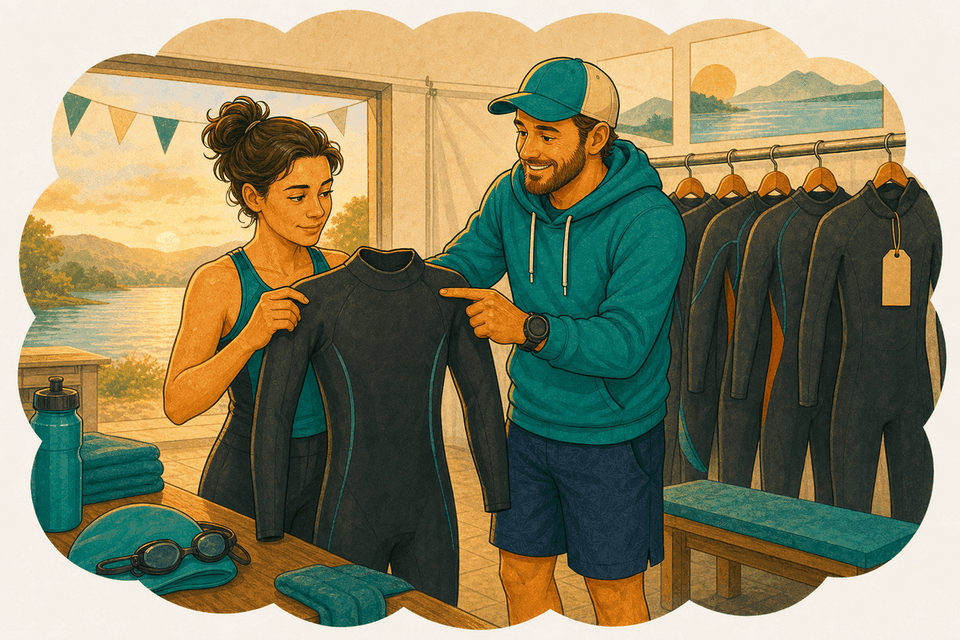
You get sizing help. Most rental shops and online rental services will walk you through measurements and pick a size for you. That guidance is gold when you have never zipped into neoprene before and have no idea what snug but not strangling is supposed to feel like.
There is no commitment. This is the big one. If you are not yet sure triathlon is your thing, renting means you are not stuck with a pricey suit gathering dust in the garage. Do your first race, see how you feel, and decide from there. No pressure, no buyer's remorse.
The Case for Buying
Now, buying is not wrong. It is just a different bet. Here is when it makes sense.
You will race a lot. If you already know you are in this for the long haul and you plan to do several open-water races a year, buying gets cheaper over time. A few rentals can add up to the price of owning a suit, so if you are racing often, ownership wins the math eventually.
You want a perfect fit. A wetsuit that is truly yours can be dialed in to your body. Fit matters more than brand, more than price, more than fancy panels, and we will get to that in a second. Owning lets you find the suit that fits you and stick with it.
You can train in it. This is the quietly important one. If you own your suit, you can wear it on practice swims and get used to the snug chest, the slightly different breathing, and the buoyancy lifting your hips. Race day feels a lot calmer when the suit already feels familiar. By the way, plenty of folks ask what goes underneath, and I have you covered there too in what to wear under a triathlon wetsuit.
A Rough Cost Comparison
Let us put some loose numbers on it so you can see the shape of the decision.
A brand-new entry-level triathlon wetsuit typically runs a few hundred dollars, and nicer ones climb from there. A single rental for race weekend is usually a small slice of that, often well under a hundred dollars depending on the shop and how long you keep it.
So the simple framing is this. One rental costs a little. Buying new costs a lot up front but nothing per race after that. Somewhere around your third or fourth race, if you keep renting, the costs start to even out and ownership begins to pay off.
And there is a nice middle path many beginners miss: buying used. A gently worn wetsuit from a club member, a local tri group, or an online secondhand listing can cost a fraction of new while still being yours to train in. Just check the seams and zipper, and make sure it fits you, because a cheap suit that fits wrong is no bargain.
Why Fit Beats Everything Else
If you take one thing from me today, take this: fit matters more than anything. A perfect-fitting cheap suit will serve you better than an expensive suit that is loose or too tight.
Too loose and water floods in, which kills the warmth and the buoyancy you paid for. Too tight across the chest and shoulders and you will feel like you cannot get a full breath, which is the last thing you want on a nervous first swim. You are aiming for snug like a firm handshake, with no big gaps at the neck, lower back, or armpits, and enough room to roll your shoulders through a stroke.
This is exactly why renting is so friendly for beginners. You get a hand with sizing and a chance to feel a real fit before you spend big. Whether you rent or buy, take the time to get this right.
One more thing, and it matters more than any gear decision. A wetsuit adds warmth and helpful buoyancy, and that buoyancy can make the water feel more forgiving, but it is not a safety device and it does not replace good judgment. Never swim open water alone. Practice with a coached group, a buddy, or a lifeguarded swim, and give yourself easy water to learn in. If open water makes your heart race a little, that is normal, and I wrote you a gentle plan for that in how to not panic in open water.
So, Rent or Buy?
Here is my honest coach answer. For your very first race, rent. It is cheap, it is low-risk, you get sizing help, and you find out whether this open-water thing is for you before spending real money. If you already know in your bones that you are committed and you will be racing often, go ahead and buy, and lean toward used if your budget is tight. Either way, chase fit first.
You have got this. And if you would like a calm, beginner-friendly path from the couch to your first finish line, come grab a free plan at couchtotri.com. I would love to help you get there.